
Scuba Gear Guide: What Equipment Do You Need?
Phillip Hetherington Jun 21, 2026
A Beginner's Guide to Scuba Diving Equipment
One of the first questions new divers ask is what gear they need to buy. The honest answer: not everything at once. Scuba diving equipment breaks into things you should own, things that make sense to rent until you know your preferences, and things you probably do not need to buy until you are diving regularly.
This guide walks through every major piece of scuba equipment, what it does, and whether it belongs in your gear bag from the start.
The Core Scuba Gear System
A complete scuba setup consists of seven core components. Most dive shops, including Sugar Land Dive Center, rent the bulkier items so you can learn what you like before committing to a purchase.
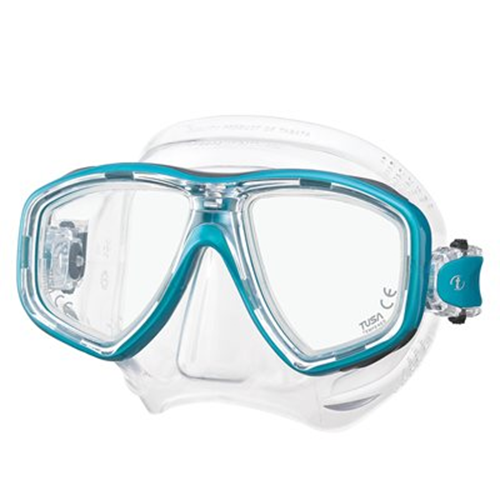 Mask
Mask
Buy This First
Your mask creates an air space in front of your eyes so you can see clearly underwater. Human eyes cannot focus in water without one. A mask that fits your face and does not leak is essential to an enjoyable dive.
This is the first piece of gear you should own. A poorly fitting rental mask that leaks constantly is distracting and uncomfortable. A mask that fits perfectly is something you barely notice underwater, which is exactly what you want.
How to check fit: press the mask gently against your face without using the strap. Inhale lightly through your nose. If the mask holds to your face without you holding it, the seal fits your face shape. If it falls, try a different mask.
Features to consider: tempered glass lenses (standard on any decent mask), a comfortable silicone skirt, low volume (closer to your face) for easier clearing, and adequate field of view. Color and style matter too. You are going to be wearing this thing a lot.
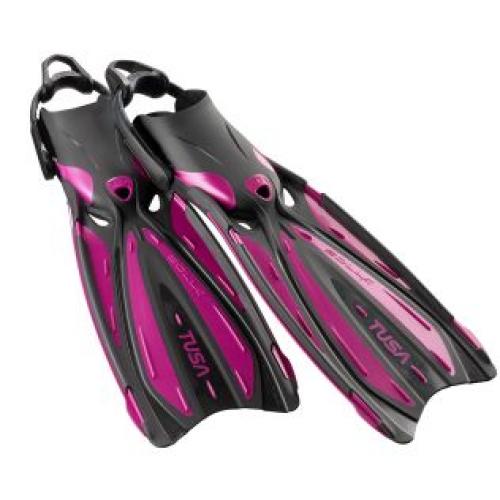 Fins
Fins
Buy These Early
Fins convert leg power into forward movement through the water. There are two main styles: full-foot fins, which fit like a shoe and are best for warm water, and open-heel fins with adjustable straps that are worn over wetsuit booties and work in all conditions.
For diving in Texas and the Gulf of Mexico, open-heel fins with booties are the more versatile choice. They work in cold and warm water, are more comfortable for walking on boat decks and entry points, and the booties double as foot protection.
Blade style matters too. Larger, stiffer fins move more water per kick and suit divers with strong legs who dive in currents. Shorter, more flexible fins are easier to use for long periods without fatigue. Split fins generate less resistance and are easier on your knees if that is a concern. Talk to a dive professional before buying to match the fin to your diving style.
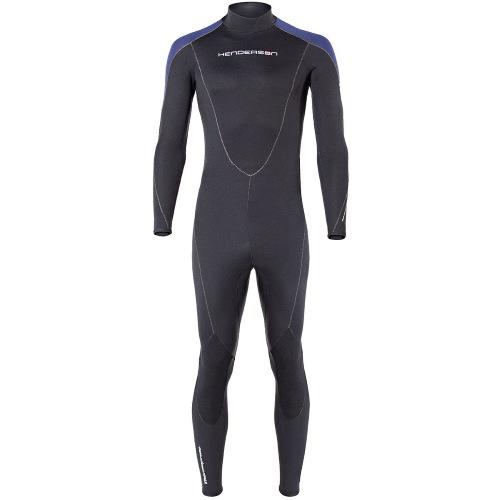 Wetsuit
Buy One Suited to Where You Dive
A wetsuit traps a thin layer of water against your skin, which your body heats and which then insulates you from the cooler surrounding water. The thickness is measured in millimeters. Thicker suits provide more warmth. Thinner suits offer more flexibility and are cooler in warm water.
For Gulf of Mexico diving near Houston, a 3mm wetsuit covers most conditions from late spring through early fall. For winter diving or deeper water, a 5mm full suit or a 3mm with a hooded vest provides more protection. For Flower Garden Banks diving in summer, some divers get by with a 2mm shorty or even a rash guard, though a 3mm full suit is more versatile.
Fit is everything with a wetsuit. Too loose and water flushes through constantly, eliminating the insulation effect. Too tight and it restricts breathing and movement. Try wetsuits on before buying. A well-fitted wetsuit should feel snug in the shop but comfortable in the water.
Wetsuit booties protect your feet and are necessary for open-heel fins. Gloves and a hood are worth adding for cooler water or night diving.
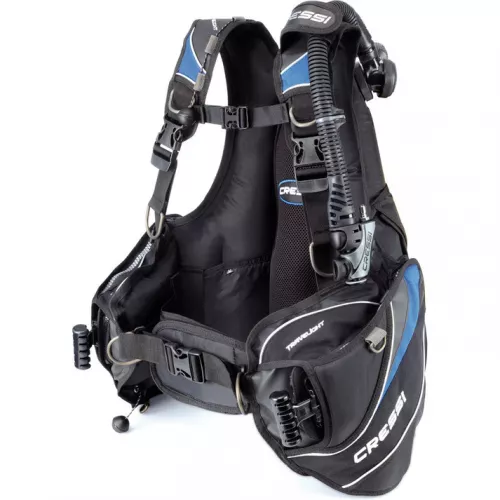 BCD (Buoyancy Compensator Device)
Rent First, Buy When You Know What You Want
Your BCD is an inflatable vest that holds your scuba tank and lets you control your buoyancy by adding or releasing air from the built-in bladder. Add air and you rise. Release air and you sink. Get it right and you hover neutrally at any depth with no effort.
BCDs come in several configurations: jacket-style (the most common for recreational diving), back-inflate (air bladder behind you, more streamlined), and wing systems (used in technical diving). Most new divers start with a jacket BCD, which is stable and easy to use.
BCD fit matters. It should fit snugly without restricting breathing when inflated. Too large a BCD is hard to control; too small restricts your range of motion. Rent a few different BCDs at the start to get a feel for what suits you before investing in your own.
Features to look for when buying: comfortable weight-integrated pockets (eliminating a separate weight belt), durable D-rings for accessories, easy-to-operate dump valves, and a reputable brand with available service.
 Regulator
This Is Worth Buying Your Own
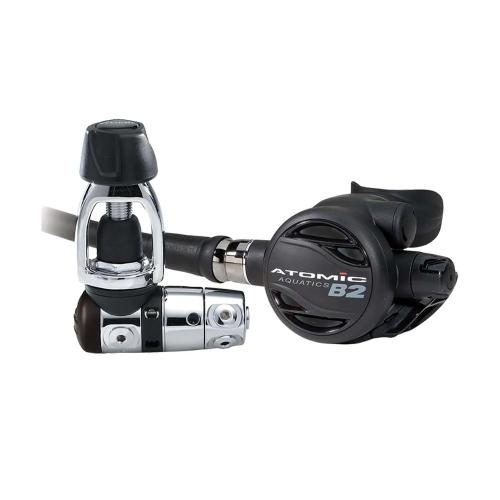
Your regulator reduces the high-pressure air in your tank to a breathable pressure. It attaches to the tank valve and delivers air on demand when you inhale. The second stage is the part that goes in your mouth.
A quality regulator that is properly maintained is one of the most important safety items in your kit. Regulators vary significantly in breathing effort, especially at depth and in cold water. Entry-level regulators breathe fine in warm, shallow recreational diving. Higher-end regulators breathe more easily at depth and in demanding conditions.
You should also have an alternate air source (octopus), which is a second second-stage on your regulator system that a buddy can breathe from in an out-of-air emergency. Most divers have this built into their BCD as an inflator/alternate air source combination, or as a separate yellow second stage.
Regulators require annual inspection and service. When you buy your own regulator, build the service cost into your annual gear budget.
 Dive Computer
Buy One Early
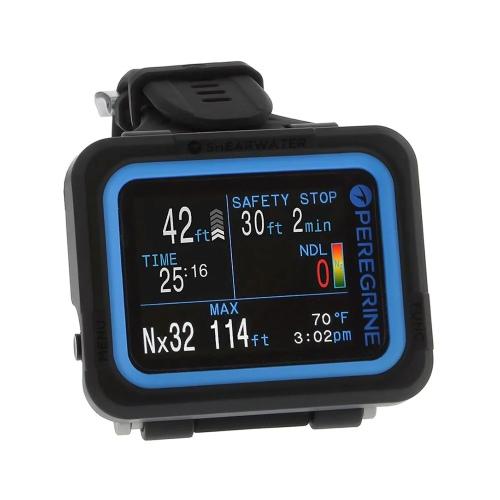
A dive computer tracks your depth and bottom time in real time and calculates your nitrogen absorption so you can dive safely without manually working through dive tables. Modern dive computers are easy to read, reliable, and significantly safer than table-based planning for multi-dive days.
Entry-level wrist-mount dive computers are affordable and do everything a recreational diver needs. Higher-end computers add air integration (reading your tank pressure wirelessly), compass functions, full color displays, and more sophisticated algorithm options.
For new divers, a solid mid-range wrist computer is the right starting point. You do not need the most advanced computer on your first dive, but you do want a computer that is easy to read and has a clear, reliable low-no-deco alarm.
 Tank
Tank
Rent This, Always
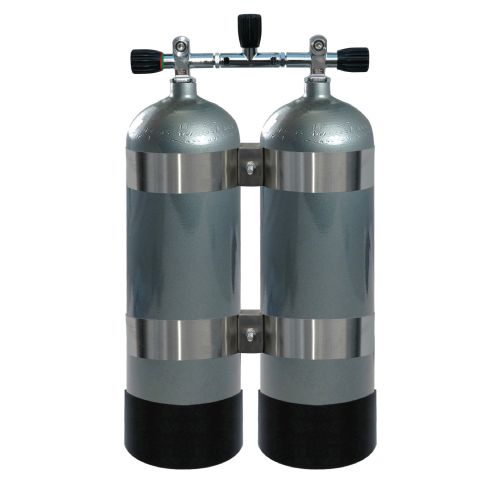
Scuba tanks are heavy, require regular hydrostatic testing and visual inspections, and need a fill station to refill. Owning a tank makes sense if you dive very frequently from a home base, but for most recreational divers, renting from a dive shop or using resort tanks on trips is the practical choice.
Standard recreational diving uses aluminum 80 tanks holding approximately 80 cubic feet of air. Steel tanks are heavier but hold more air and require less lead weight to compensate for their buoyancy characteristics.
Sugar Land Dive Center offers tank fills and rentals for divers who need them.
Weight System
Rent Until You Know Your Weight Requirement
Most divers need some added weight to achieve neutral buoyancy. Lead weights in a weight belt or integrated weight pockets in your BCD compensate for the buoyancy of your wetsuit and other gear.
Your exact weight requirement changes depending on your wetsuit thickness, salt versus freshwater, the tank you are using, and your own body composition. It typically takes a few dives to dial in your personal weight requirement, which is why renting weights while you are getting started makes sense.
Quick-release weight pockets are a safety feature worth prioritizing. In an emergency, you need to be able to ditch your weights instantly without fumbling.
Surface Marker Buoy (SMB)
Buy One. Always Dive With It.
A surface marker buoy (SMB) is an inflatable tube you deploy at the end of a dive while still underwater. It alerts boat traffic to your location so you can surface safely. An SMB is inexpensive, takes up almost no space in your gear bag, and is an absolute essential for open water diving anywhere boats operate.
Get a bright-colored (orange or yellow) SMB and practice deploying it before you need it in a real situation.
Dive Light
Nice to Have for Night Diving and Wrecks
A dive light reveals the true colors of the underwater world (sunlight filtering through water removes red and orange wavelengths at depth) and is essential for night diving and overhead environments like wrecks and caverns. A primary light and a smaller backup light are recommended for any dive where visibility conditions might change.
What to Buy First: A Practical Order
If you are just starting out and want a sensible purchasing sequence, here is how most divers approach it:
- First: mask, fins, booties (personal fit items that make every dive better)
- Second: wetsuit and surface marker buoy
- Third: dive computer
- Fourth: regulator
- Fifth: BCD
- Rent: tanks, weights
There is no rule that says you have to buy everything at once. Many divers build their kit piece by piece over the first year of diving, renting whatever they do not yet own. The shop can always tell you what is available for rent and what makes sense to prioritize purchasing.
Get Gear Advice at Sugar Land Dive Center
Sugar Land Dive Center is a full-service dive shop in Sugar Land, TX, serving Houston, Katy, Pearland, and the Greater Houston area. We carry a curated selection of scuba equipment and can help you choose gear that matches your diving, your budget, and your body.
We do not upsell. We help you buy what you actually need for how you actually dive. Come in and talk to us, or call ahead to discuss what you are looking for.
Phone: 281-240-3483
Address: 3362 Highway 6 South, Sugar Land, TX 77478
